
David Schrock · April 22, 2015 · 10 min read
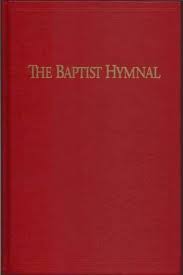
Singing the TULIP from the Baptist Hymnal
T -- Amazing Grace (330)
In John Newton’s hymn, “Amazing Grace,” we find the scandal of grace. Newton a former slave-trader who did not deserve the kindness of God was overwhelmed by the mercy he had received. He knew the depths of his sin, and he wrote his first stanza exclaiming his own wretchedness:Amazing Grace, how sweet the sound / That saved a wretch like me / I once was lost, but now am found / Was blind, but now I see
Newton never forgot who he was before Christ, and thus he remained amazed by grace. So too, every believer who looks not at the sins of others, but who ponders the depths of his or her own depravity, will not want to forget their total depravity. As Paul wrote, "The saying is trustworthy and deserving of full acceptance, that Christ Jesus came into the world to save sinners, of whom I am the foremost" (1 Tim 1:15). As a former persecutor of the church, Paul never "got over" his violent opposition to Christ. So too, we who have received the mercy of God in salvation can't forget who we were before salvation. Rather, we ought to find fresh amazement at God's grace to us---the worst sinner we know. For this reason we sing of the total depravity from which we were saved.U -- My Lord, I Did Not Choose You (289)
While the doctrine of election has provoked many to anger; it is meant to evoke praise. As in Josiah Conder's hymn, "My Lord, I Did Not Choose You." Conder, a nineteenth century British Congregationalist and Abolitionist, wove the words of John 15:16 and 1 John 4:19 into a beautiful hymn describing God's electing love. He sings,- My Lord, I did not choose you, / For that could never be; My heart would still refuse You, / Had You not chosen me You took the sin that stained me, / You cleansed and made me new Of old You have ordained me, / That I should live in You.
- Unless Your Grace had called me / And taught my opening mind The world would have enthralled me, / To heav’nly glory blind My heart knows none above You; / For Your rich grace I thirst I know that if I love you; / You must have loved me first
L -- The Church's One Foundation (350)
Perhaps the most contentious petal on the TULIP is the 'L,' which stands for Limited Atonement. Better described as Definite Atonement or Particular Redemption, the heart of this doctrine is that God the Son bled and died for the covenant people whom God gave him before the world began (see John 17). Variously described as his sheep (John 10), his church (Acts 20:28), his beloved bride (Eph 5:25--27), and God's children (John 11:51--53), the focus on this doctrine is not the exclusion of the non-elect. It is the precious reality that all God set his love on (i.e., those who he foreknew/foreloved), he stopped at nothing to procure their salvation. It stands against the provisional notion of the cross and extols God's power, wisdom, and love to effectively accomplish the salvation of his own. In Baptist hymnody, no song captures this doctrine better than Samuel John Stone's, "The Church's One Foundation." Writing as an Anglican minister in the 19th C., Stone's hymn captures the purpose of Christ's incarnation---to effectively secure the salvation of his bride.The church's one foundation is Jesus Christ her Lord. She is his new creation by water and the word. From heaven he came and sought her to be his holy bride. With his own blood he bought her, and for her life he died.
Without denying the universal offer of the gospel, Calvinists rejoice in the powerful working of the Son. Definite atonement is the belief that Christ's death saved his people without remainder. Thus we sing songs like "The Church's One Foundation," because it glories in promise of Revelation 5:9: By his blood, Christ "ransomed people for God from every tribe and language and people and nation." The language of this heavnly verse speaks of God saving his people "from" or "out of" (ek) every nation; not that he redeemed every person in every nation. If he attempted to do the latter, the efficacy of the cross would be lessened---and thus praise decreased. As it stands we sing praise to the Son for his definite atonement.I - And Can It Be (147)
Exception might be taken to the fact that one not be a Calvinist to sing these songs with gusto. And, of course, this is true. Many believers can praise God for biblical truths without situating them in a theological system. But such an objection misses the mark: the point to be made is that the hymns which best extol the grace of God are most coherent with Calvinist theology, whether the author is Calvinist or not. Certainly, this is the case with non-Calvinist Charles Wesley. Charles, the brother of famed non-Calvinist preacher, John Wesley, wrote thousands of hymns in his life. And few are more famous than, “And Can It Be.” This hymn speaks of his own salvation experience, and in the fourth stanza he speaks of the work of the Spirit bringing him from death to life. What he exactly meant, and how he exactly understood the operations of the Spirit in regeneration, I don't know---I'd be happy for someone better versed in Wesley's theology to share. But what he describes is the doctrine of Effectual Calling (i.e., Irresistible Grace) as Calvinists understand it.Long my imprisoned spirit lay / Fast bound in sin and nature's night; Thine eye diffused a quick'ning ray, / I woke, the dungeon flamed with light; My chains fell off, my heart was free; / I rose, went forth and followed Thee.
Wesley recounts his personal response to God, placing it in response to the light of the Lord that broke into the darkness of his living coffin. In a sense he speaks of the same Spirit-given grace we find in Titus 3:4--7:But when the goodness and loving kindness of God our Savior appeared, he saved us, not because of works done by us in righteousness, but according to his own mercy, by the washing of regeneration and renewal of the Holy Spirit, whom he poured out on us richly through Jesus Christ our Savior, so that being justified by his grace we might become heirs according to the hope of eternal life.
In poetic terms, Wesley describes the work of the Spirit---at the command of Jesus, the Spirit awakens the unbeliever from his spiritual deadness. The resurrection power of the Spirit provides a "quickning ray" and frees the spirit. As Wesley orders it, the unbeliever is released from his enslavement to sin and is able like Paul and Silas to walk out of the tomb crying out to God. In other words, the order here is regeneration first, then believing pursuit. However Wesley understood it, this is what Calvinists praise God for---while we lay dead in darkness, God awoke us by shining his light into our heart; hence, freed from our shackles, we (and all true Christians, regardless of their theology) freely chose to follow the one who set them free. Understood in this way, it is obvious why we extol the irresistible grace of God.P -- Come Thou Fount of Every Blessing (15)
Finally, we come to Robert Robinson, who wrote of God's sustaining and preserving grace in the third verse of “Come Thou Fount of Every Blessing.” Appropriately, his song expresses both his commitment to God and his need for God’s grace to keep him.Oh, to grace how great a debtor daily I'm constrained to be! Let thy goodness, like a fetter, bind my wandering heart to thee: prone to wander, Lord, I feel it, prone to leave the God I love; here's my heart, O take and seal it; seal it for thy courts above.
Appropriately, the collaborative effort of God's preservation and the believer's Spirit-empowered perseverance strikes the right balance. Unlike election, atonement, and calling, which depend entirely on God's free grace; the doctrine of perseverance is a 'synergistic' work between God and the believer. Whereas, the triune God effects salvation from first to last (what is called 'monergism'); perseverance involves the volition and action of men to keep believing. Still, such belief is not self-generated. As "Come Thou Fount" implores, ability to keep walking with God is a gracious gift from God, underwritten by the Son's sacrifice and supplied by the Spirit of Christ. Hence, believers sing songs of lament for their ongoing debt, confessing the waywardness of their hearts. And simultaneously they express hope that God can supply them with the grace to keep traveling on the road to the Celestial City. Indeed, this last stanza is the testimony of every Calvinist—Lord I believe; help my unbelief. Lord, I trust you, but I feel my heart wandering. Jesus, I love you, so keep me in love with you.Grace that Makes You Sing
In truth, the doctrines of grace are not meant, first and foremost, for the court of debate. They come from the pages of Scripture calling us to worship the triune God for his unfathomable grace. And for those whose eyes have been opened to see their beauty, they will not become ends in themselves, but portals to behold the infinite splendor of God himself---the Father who elects; the Son who atones; and the Spirit who regenerates. In response to the God who sings over us (Zeph 3:17), may we delight to return praise to him for his free grace. Soli Deo Gloria, ds0 views0 comments
Recent Posts
See All


Leave a comment
Comments are read before they appear. Your email is never published.