
David Schrock · September 18, 2018 · 10 min read
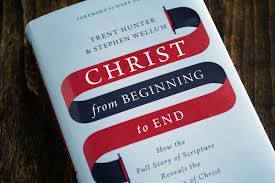
From the First Adam to the Last Adam: 15 Quotations from 'Christ from Beginning to End'
Adam at the Beginning of Redemptive History
The Bible tells us that Adam is intended to point us to Christ. When Adam is first introduced, we know he is important because he represents the entire human race. This truth is reinforced as “Adam-like” people continue to carry on Adam’s role through the covenants (e.g., Noah, Abraham, Israel, David), which ultimately reaches fulfillment in Jesus, who is called the last Adam (Rom. 5:12–21; 1 Cor. 15:21–28; Heb. 2:5–18). In a similar way, Moses points to Christ, speaking of a prophet greater than himself (Deut. 18:15–18; Acts 3:17–26). David, likewise, died expecting a son/king to sit forever on his throne (2 Sam. 7:14; Matt. 1:1–18). Each of these people served as a type for the greater one to come, Jesus Christ. (66)
Adam isn’t merely the first human being God made. He also serves as humanity’s covenant head and representative. . . . As the Bible’s story continues, Adam’s role and headship will be contrasted with that of the last Adam, our Lord Jesus Christ, who comes as the head of the new creation. Many prominent people are in Scripture, but Adam and Christ are the most significant. The entire Bible is structured in terms of these two men. We are either “in Adam” by our natural birth, or we are “in Christ” by a new, spiritual birth (Rom. 5:12–21). No other options are available to us. . . . Without a grasp of Adam and his representative role—for good and, sadly, for ill—the Bible’s story makes little sense. (78–79)
Adam's Sin and the Fall of Mankind
[After Adam’s sin, God] punishes each party according to their creation domain. . . . The woman will experience pain in childbearing and discord with her husband. Adam will be in conflict with Eve, and the earth under his rule is now cursed. While the ground belongs under Adam’s feet, Adam will eventually find himself six feet under, as will every human who comes from him. For this reason, Scripture roots the human problem of sin and death back to Adam, and then to each one of us: “Sin entered the world through one man, and death through sin, and in this way death came to all people, because all sinned” (Rom. 5:12). Yes, tragically, “in Adam all die” (1 Cor. 15:22). We are all born condemned and corrupt because of our association with him. . . . [And] Everything wrong with this world traces back to Adam’s sin, God’s curse, and the outworking of Adam’s rebellion among his descendants. (88–89)
Noah as New Adam
Noah’s world is a new creation, and Noah himself is a new Adam. We see this through a series of significant parallels that help us to consider how God’s commission to Noah was a restatement of the charge he gave to Adam. (107)
[Here is a shortlist of parallels.]|
God blessed them and said to them, “Be fruitful and increase in number; fill the earth and subdue it” (Gen. 1:28).
|
Then God blessed Noah and his sons, saying to them, “Be fruitful and increase in number and fill the earth” (Gen. 9:1).
|
|
“Rule over the fish in the sea and the birds in the sky and over every living creature that moves on the ground . . . And to all the beasts of the earth and all the birds in the sky and all the creatures that move along the ground—everything that has the breath of life in it . . .” (Gen. 1:28, 30).
|
“The fear and dread of you will fall on all the beasts of the earth, and on all the birds in the sky, on every creature that moves along the ground, and on all the fish in the sea; they are given into your hands. Everything that lives and moves about will be food for you” (Gen. 9:2–3).
|
|
“I give you every seed-bearing plant on the face of whole earth and every tree that has fruit with seed in it. They will be yours for food . . . I give every green plant for food” (Gen. 1:29–30).
|
“Just as I gave you the green plants, I now give you everything” (Gen. 9:3).
|
God's Promise to Abraham Restores What Adam Lost
The scope of God’s plan through Abraham is not local but global. This makes sense if we locate Abraham’s story in the context of what preceded him in Genesis 1–11. In creation and in Adam, God made his universal purposes plain: Abraham and his seed are now the means God will use to restore what was lost in Adam for the entire world. (125–26)
Israel is a New Adam and Kingdom of Priests Meant to Bring Salvation to the World
Moses wrote the first five books of the Bible, commonly known as the Pentateuch, in a specific order for a purpose. He wanted us to read the story of the exodus in light of what happened in Genesis. The exodus and Israel’s role as a nation should be understood in light of the stories of creation, Adam, the fall, and the Patriarchs. (49)
As the story unfolds further, it becomes clear that while Israel sometimes obeys, the pattern of her life as a nation is largely one of disobedience to God’s Word. Despite her special calling and God’s promises and blessings, Israel acts just like Adam in her rebellion and rejection of God. (58)
In Israel, the world was supposed to witness humanity living in rightly ordered relationship to God, one another, and the rest of the world. This is how God’s treasure would look. This is how a kingdom of priests— those mediating God’s presence and fulfilling Adam’s role—was to live before the world. (129–30)
Israel functions in a similar role to Adam in relationship to God and God’s global purposes. As a nation, the people are to image and represent God. Furthermore, as a son is to a father, so Israel is to God. This relationship shapes Moses’ appeal to Pharaoh: “This is what the Lord says: ‘Israel is my firstborn son, and I told you, “Let my son go, so he may worship me”’” (Ex. 4:22–23). In her life as a nation, Israel’s special relationship takes on special shape institutionally in the assignment of prophets, priests, and kings. These institutions express the various roles that Adam held as God’s image and son (Luke 3:38), and they indicate what we are to look like as rightly ordered humanity. (142)
David and His Sons Receive the Rule Which Adam Lost
David was to be all that Adam was supposed to be—a faithful son/ king. As we saw previously, Adam’s role as image/son pervades the storyline to this point. Collectively as a nation, Israel was intended to embody all that God had planned Adam to do and to be. At her deliverance from Egypt, Israel was corporately identified as God’s son (Ex. 4:22–23). Now David is identified as God’s individual son (2 Sam. 7:14), and he takes on Israel’s role as her representative. Israel remains God’s corporate son, but in the Davidic covenant, the king assumes Israel’s roles and functions as God’s representative to the world. In his entire life, the king is to act like God—his Father—as a faithful, obedient son, and ultimately bring God’s saving rule to this world. All of God’s promises and purposes are now centered on the Davidic king. . . . In David, we begin to see a confluence of offices—prophet, priest, and king—signaling the reestablishment of what God intended for humanity in Adam. (162–63)
Christ is the True Adam, His Covenant the Goal of Redemption
What’s new about the new covenant? For our answer, let’s return to the new covenant promise we looked at earlier in Jeremiah 31. The Lord called this covenant new for several good reasons. It’s better than the old covenant made with Israel at Sinai, the covenant Israel broke. Even more, the new covenant is new in its unique ability to fulfill the Adamic, Abrahamic, and Davidic expectations. To put this another way, the new covenant eclipses each previous covenant because it fulfills them. This covenant resolves the tension we’ve felt in the Bible’s story to this point. (187)
Reaching all the way back to Adam, the centerpiece of God’s covenant with creation was humanity, the crown of God’s creation, and it was mediated through Adam. When Adam fell, he took humanity and the creation with him in his sin and rebellion. God’s new covenant reverses this, including the effects of the curse God has placed on humanity and the world because of Adam’s sin. This new covenant creates a new and regenerated heart. (189)
The distinction between the Old and New Testaments best shows us the promise-fulfillment structure of Scripture. This significant division reminds us how God’s promises are now fulfilled in Christ. As the covenants unfold from Adam to Christ, we discover how God’s initial promise in Genesis 3:15 is accomplished with greater clarity and detail. The simple way to grasp this is to say that the Old Testament is the story of God’s promise and the New Testament is God’s fulfillment of all he has promised. (64)
What does Jesus’ encounter with the demoniac show us about the salvation he brings? That while Adam stands as the head of the human race, Christ stands as the head of a new race, a completely regenerated humanity. (209)
Christ stands in complete and total contrast with Adam. Adam, the first man and head of the old creation, represents sin, rebellion, and death. Jesus, God the Son incarnate and the head of the new creation, represents obedience, life, and resurrection power (Rom. 5:18–19). As in Adam all die, so in Christ is life, the forgiveness of sin, righteousness, and the Spirit (Rom. 5:12–21; 8:1–17). (226)
In truth, there were many other points of connection made between Adam and Christ in Christ from Beginning to End. But for those, you'll have to go pick up the book. Soli Deo Gloria, dsAdamBibleBiblical TheologyJesusOld TestamentSteve WellumTheology
0 views0 comments
Recent Posts
See All

Leave a comment
Comments are read before they appear. Your email is never published.