May 15, 2010 · 5 min read
A Word-Driven Ministry
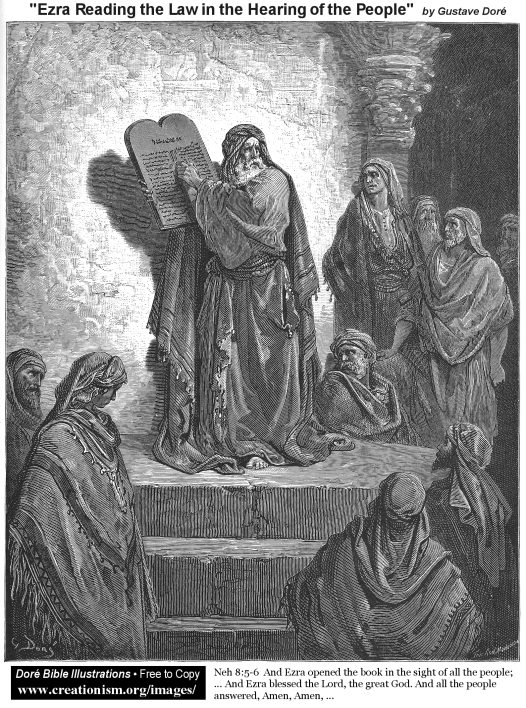 On Wednesday night, I taught through the book of Nehemiah as a part of our year long journey through the Bible--Via Emmaus: A Christ-Centered Walk Through the Bible. My aim was to show the redemptive-historical features of the book and patterns of salvation that are extant in the book. However, the book also provides an excellent portrait of godly leadership and a word-driven ministry. (For more on that see Mark Dever's chapter on Nehemiah in The Message of the Old Testament: Promises Made).
Ezra and Nehemiah are two books that show the sovereignty of God to reestablish God's people (Israel) in God's place (Jerusalem). They also do a great deal to show how YHWH leads Israel back into covenant with himself, and with that covenant renewal comes a laser beam focus on the power of God's word. For instance, Nehemiah 8 illustrates the way God's word can transform a people. And for God's covenant people today, it gives an excellent motion picture of what the ministry of the word could and should look like. Even with the differences that exist between that Old Covenant period of Ezra-Nehemiah and the church today, Ezra's priestly ministration models a commitment to God's Word worthy of imitation (cf Heb 13:7).
Here are 6 Marks of a Word-Driven Ministry from Nehemiah 8:
On Wednesday night, I taught through the book of Nehemiah as a part of our year long journey through the Bible--Via Emmaus: A Christ-Centered Walk Through the Bible. My aim was to show the redemptive-historical features of the book and patterns of salvation that are extant in the book. However, the book also provides an excellent portrait of godly leadership and a word-driven ministry. (For more on that see Mark Dever's chapter on Nehemiah in The Message of the Old Testament: Promises Made).
Ezra and Nehemiah are two books that show the sovereignty of God to reestablish God's people (Israel) in God's place (Jerusalem). They also do a great deal to show how YHWH leads Israel back into covenant with himself, and with that covenant renewal comes a laser beam focus on the power of God's word. For instance, Nehemiah 8 illustrates the way God's word can transform a people. And for God's covenant people today, it gives an excellent motion picture of what the ministry of the word could and should look like. Even with the differences that exist between that Old Covenant period of Ezra-Nehemiah and the church today, Ezra's priestly ministration models a commitment to God's Word worthy of imitation (cf Heb 13:7).
Here are 6 Marks of a Word-Driven Ministry from Nehemiah 8:
- Word-Based: There wasn't any gimmick, program, or contrived technique to change the people. From morning to midday, Ezra read the Law (v. 3, 5) and Levites gave the sense (v. 7-8). Ezra displayed incredible faithfulness to the Scriptures, and the sufficiency of God's Word is seen in the fact that they simply read and explained the text, and hearts were moved. If only, we would have the same commitment today!
- Expositional teaching: The kind of teaching that changes lives in Ezra is the kind that simply reads and explains the 'Bible'. It aims to understand God's word and make known the plain sense of the inspired Word; it reads the text in context and applies it to our lives. Ezra and his team of "small group leaders" took the word and helped the people understand it. The words they read surely came form or were based on Law of Moses, and yet they understood the words as speaking to them (cf Deut 32:47). The result was a deep sense of contrition and thanksgiving, as well as, a reinstitution of the Feast of Booths, which recalled God's saving work during the Exodus (8:13ff).
- Community: A word-driven ministry gathers around the word in unity and with regularity (v. 1). In Nemehiah 8 we see men, women, and children gathering as one man to hear God's word (v. 1, 3, 8) and to receive instruction (v. 7). As a result, the entire nation repented and rejoiced as they heard the word (8:9-12). For more on the centrality of the gathered people around the word, see Christopher Ash's new book, The Priority of Preaching. The third chapter explains the necessity of the assembly that gathers to hear God's word: Powerful!)
- Plurality of teachers: As Ezra opened God's Law, he was surrounded by Israelite leaders whose names are recorded in verses 4 and 7. While Ezra was the leading teacher (a model that is continued in the NT and in churches today), he was not alone (a pattern also continued in the NT and sorely missing in many churches today). Because the Word is authoritative, it is appropriate to have a plurality of teachers. In fact, while a church can begin with a singular teacher, it does better to move towards a plurality of leader-teachers, what the NT calls pastor-teachers, elders, and/or shepherds.
- Elevation of the Word: Ezra stood on a platform "made for the purpose" of lifting high the Word of God; the people stood to hear it; hands were raised and audible sounds made indicating that this is God's word-- "Amen!" The people were not stoic recipients of God's word, nor were they impatient consumers. They hungered for God's word and listened with intensity and receptive participation.
- Heartfelt Affection: The appropriate response to God's word is not only cognitive acquisition, but also heartfelt affection. Those who heard the word of God, were moved to tears (v. 9); they were encouraged to take heart (v. 10), and they wept away rejoicing because they had understood God's word (v. 11-12). True understanding is not simply intellectual, it is emotive and volitional, too. Thus listening to the Word read or preached is not a passive activity. It requires earnest prayer and heart preparation to be moved by God's word. For preachers, too, it is essential that God's word grips our hearts as much as our heads.
Leave a comment
Comments are read before they appear. Your email is never published.