September 29, 2016 · 5 min read
Transgenderism: But One Fruit on Individualism's Pernicious Vine
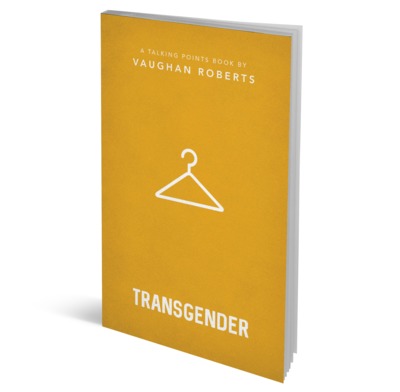 In recent days, the subject of gender and transgenderism have been the talk of our county and our church. Coming, therefore, at the perfect time is Vaughn Roberts little book Transgender. In preparation for my sermon on the subject I read his book with great profit.
In less than 80 pages, Roberts, a British pastor who has himself grappled with same sex attraction, introduces the subject (ch. 1), sets out a biblical response through the framework of creation (ch. 3), fall (ch. 4), and rescue/redemption (ch. 5). He concludes with a chapter on wisdom (ch. 6), where he speaks to individuals and churches on how to lovingly and truthfully respond to our trans neighbors and family members. Still, the chapter that is most important in his book is chapter 2, titled "The iWorld."
In this section, Roberts frames transgenderism against the backdrop of the Enlightenment and the (post)modernism turn towards the subject. In just a few pages he explains how a recent flurry of advocacy for an age-old condition, i.e., transgenderism (see Deuteronomy 22:5), stems from a Western world head-over-heels in love with the self.
In recent days, the subject of gender and transgenderism have been the talk of our county and our church. Coming, therefore, at the perfect time is Vaughn Roberts little book Transgender. In preparation for my sermon on the subject I read his book with great profit.
In less than 80 pages, Roberts, a British pastor who has himself grappled with same sex attraction, introduces the subject (ch. 1), sets out a biblical response through the framework of creation (ch. 3), fall (ch. 4), and rescue/redemption (ch. 5). He concludes with a chapter on wisdom (ch. 6), where he speaks to individuals and churches on how to lovingly and truthfully respond to our trans neighbors and family members. Still, the chapter that is most important in his book is chapter 2, titled "The iWorld."
In this section, Roberts frames transgenderism against the backdrop of the Enlightenment and the (post)modernism turn towards the subject. In just a few pages he explains how a recent flurry of advocacy for an age-old condition, i.e., transgenderism (see Deuteronomy 22:5), stems from a Western world head-over-heels in love with the self.
Here's a portion of Roberts survey,
The roots of the profound individualism that marks our culture go back to the period of the Enlightenment 300 years ago, when intellectuals began to assert the primacy of human reason over divine revelation. Most people have never read the works of philosophers like Voltaire and Rousseau, but their influence has gradually trickled down into our whole society so that it affects us all. The Enlightenment began with great confidence that reason could lead us to the truth, but that optimism gradually disappeared. Even the greatest human thinkers can’t agree on fundamental issues. And so, having rejected revelation and lacking confi- dence in reason, our culture has now largely rejected the concept of objective truth, at least when it comes to big issues, such as meaning and morality. So where does this leave us? With ourselves as individuals. If we think that truth is subjective, then we certainly won’t let any external authority tell us what to think or how to behave—whether it’s the government, a religion or our family. It’s up to us to draw our own conclusions and live our own lives. As the boys from Boyzone put it in one of their songs:Is such freedom really free? Roberts following the terrain of Scripture says 'no.' And so do I. Jesus said in John 8:32, "If you abide in my word, you will know the truth. And the truth will set you free." Three observations about Jesus' words.No matter what they tell you; no matter what they say; no matter what they teach you; what you believe is true.
All this explains why autonomy is so highly valued today. The iWorld teaches me to resent any challenge to my individualism. As the English philosopher John Stuart Mill, the founding father of modern Western liberalism, wrote:Over himself, over his own body and mind, the individual is sovereign.
I’m free! Free to think what I want and live as I like. Free to be me. (pp. 25--27)
- First, they come from Christ himself. While many (on the right and the left) co-opt Jesus for their own social agendas, Jesus is only committed to doing his Father's will, fulfilling the Law, and teaching his followers truth so that they can know and abide in his love. In short, the call for truth comes from Jesus himself.
- Second, only those who remain, abide, and hold onto the truth will know true freedom. Many are those who grew up in church and left, and many more have come to have a mental understanding of the truth. But only those who cling to the unchanging truth in an ever-changing culture will know freedom.
- Third, freedom is not at odds with truth; freedom is the fruit of truth. While radical individualism invites people to follow their heart, wherever it may lead. Jesus calls people to deny themselves and find freedom, fullness, and life everlasting in him---the one who is the way, the truth, and life.
Leave a comment
Comments are read before they appear. Your email is never published.