July 27, 2015 · 5 min read
The Priestly Aspect of the Imago Dei
 In The Christian Faith, Michael Horton suggests four aspects of the Imago Dei, what it means to be made in God's image. He enumerates them as
- Sonship/Royal Dominion
- Representation
- Glory
- Prophetic Witness
The Priestly Aspect
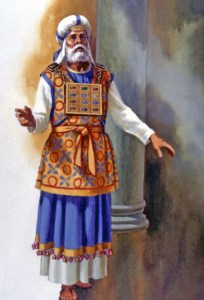
Under the category of "representation," Horton writes of the tabernacle/temple as "a microcosm of creation,At its nerve center were the priests, whose gem-studded breastplate and multicolored vestments echoed the imagery of the temple itself. It is from this quarry that the New Testament images of the church as temple and each believer as a living stone filled with the glory of the Spirit are mined. (401)
In other words, when he speaks of representation, Horton has priestly concepts in mind. That said, the vocational work of the priesthood is an under-appreciated motif. He puts in parenthesis "priestly" when he speaks of humanity's "representative (priestly) role" (ibid.). Unfortunately, in this presentation the abstract idea of representation clouds the more concrete instantiation of the imago dei as actual priests. Next, Horton picks up the idea of "glory," with its manifold displays in humanity. Citing Paul Ricoeur (Figuring the Sacred), he suggests the New Testament develops the imago dei in terms of "glory" more than that of "image" (ibid.). Adam is thus made in the image of God in order to reflect the glory of God. And as the son of God (cf. Luke 3:38), Adam was invested with righteousness that would reflect the glory of God. All of this is right and good, but it still overlooks the priestly aspect of glory. Or to say it in reverse, it is in the priesthood that we see the most clear depiction of God's created glory.Three Sample Texts
Consider three texts where the glory of God is directly related to humanity's priestly office.- Exodus 28:2. When Yahweh instructs Moses with regards to the priesthood of Aaron, he says, "And you shall make holy garments for Aaron your brother, for glory and for beauty" (Exod 28:2). As Horton noted above, the priestly garments were fashioned to reflect the temple and they were intended to display the beauty and glory of God. As some OT scholar suggest the priest in royal robes, as God's appointed representative, was to portray God's glorious presence in the midst of God's covenant people. In this way, the priest visibly manifested the glory of God.
- Ezekiel 28:11--19. The best reading of Ezekiel 28 is to understand the king of Tyre as being compared with Adam in the Garden, not Lucifer. As the NET Bible translates verse 14 (see note), "I placed you [speaking of Adam] there with an anointed guardian cherub; you were on the holy mountain of God; you walked about amidst fiery stones." For a variety of reasons, the comparison between the Gentile king and the first King indicates that it was Adam who was created in glory. Yet, the imagery of Ezekiel 28 is not just royal. The reference in verse 13 ("every precious stone was your covering") along with a list of precious stones clearly calls to mind the priestly garments. While Adam did not actually wear the jewels of the priesthood in the Garden---he was, after all, naked---we should understand his original calling to be that of a priest (cp. priestly language in Gen 2:15 and Num 3:8). For this reason, the first man (Adam) was clearly perceived to be a royal priest in Ezekiel 28.
- Hebrews. In the book of Hebrews, Christ's glorious priesthood depends on his resurrection. Hebrews 1:3 says of the resurrected Christ, "He is the radiance of the glory of God and the exact imprint of his nature." Yes, Hebrews spends great time on the sacrificial death of Christ, but don't miss how his everlasting priesthood is a result of his glorious resurrection. Christ who now reigns in glory, sitting at God's right hand, does so as a glorious priest. Greater than all the priests who have gone before him (e.g., Moses, Aaron, the Levites), he pleads the merits of his death because he has been raised to glory. Thus, once again, the glory of God is displayed in the priesthood of Christ.
The Imago Dei as Royal Priest
It could be said that such clarification is unnecessary, but to do so misses a key facet in the biblical storyline. To be made in the image of God is to be called unto priestly service (cf. Rom 15:16; 1 Pet 2:5, 9), but because of our inborn unrighteousness and covenantal ignorance, we are disqualified before we begin. The story of redemption, from this angle, tells a story of how God's greater priest comes and creates a kingdom of priests by means of a perfect sacrifice and glorious intercession. May we take this priestly calling to heart and learn from Scripture what it means to be made in God's image, as royal priests. Soli Deo Gloria, dsLeave a comment
Comments are read before they appear. Your email is never published.