March 18, 2016 · 6 min read
Reading the Bible Better: What Makes a Valid Chiasm?
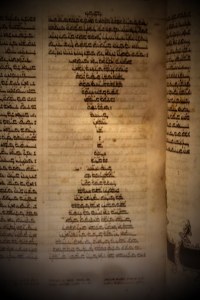 Structure is not simply artificial device or literary elegance. It is a key to meaning. Oversight of structure may result in failure to grasp the true theme.
-- Ernst Wendland --
Structure is not simply artificial device or literary elegance. It is a key to meaning. Oversight of structure may result in failure to grasp the true theme.
-- Ernst Wendland --
A1 The mariners were afraid and joined YHWH in hurling cargo (5a) A2 Jonah was unafraid and went down to sleep (5b)
B The captain confronted Jonah with God’s Words (‘Arise, call out …)
C The sailors query Jonah (7–8)
D Jonah identifies himself (9)
E The sailors are exceedingly afraid (10a
10b X Fleeing the Presence of the LORD = God’s Discipline
E’ The sailors want to know what they can do (11)
D’ Jonah suggests that the sailors drown him – repent? (12)
C’ The sailors try to save him and themselves (13)
B’ The sailors call out to YHWH ‘let us not perish’ (14)
A’ The men HURLED Jonah into the sea – the storm stopped (15)A1’ The men feared YHWH exceedingly (16) A2’ Jonah was swallowed by a fish (17)
(For other chiasms see Genesis 1--11; Matthew 3:1--4:17; 1 Corinthians 11--14). While most acknowledge the use of chiasms in Scripture, there is greater disagreement on what designates a true chiasm. Put into the form of a question: How do we know when a passage is truly “chiastic” and not just the literary creation of the interpreter? What validates a chiasm?Four Looks at the Book: Seven Interpretive Principles Condensed
Ernst Wendland (“Text Analysis and the Genre of Jonah [Part 1],” JETS 39.2 [June 1996]: 191–206) provides an illuminating study on chiasms as they are developed in Scripture and found in Jonah. In a two-part essay Wendland spends ample time discussing the finer points of literary structure and provides a seven-step approach to validating a chiasm. While his is not the final word on the subject, I find his approach helpful and cautious as we approach the Biblical text. To help keep his principles in mind, I've condensed them into four 'looks' at the book.- Look at the words of the chiasm.
- Look at the size and shape of the chiasm.
- Look for literary structures in the rest of book.
- Look for symmetry in the rest of the book.
Such methods of control are needed on account of certain excesses, arbitrariness, subjectivity and outright distortion that have appeared in far too many structural displays of this nature. Chiasms in particular tend to be posited in every conceivable portion of a given composition, often with little or no concrete corroboration evident within the text itself or supplied by the proponent. The result has been that a number of excellent commentators have become extremely skeptical of such putative schemata and tend to shy away from using them in their own analyses. (202)
To give credibility to chiasms (and other literary formations in the text), Wendland gives seven points, rearranged and organized below. First, look at the words in the chiasm. Are there lexical repetitions or connections? Verbal clues? Thematic agreement? This is the greatest argument for the presence of a chiasm. He writes,- The more overt, formal correspondences that are present, whether based on contrast (e.g. great/small, masculine/feminine, perfect/imperfect) or similarity (exact or synonymous), the more credible a given structure is. (202--03)
- A proposed structure is more tenable if it evinces a relative balance in terms of both quantity and quality with respect to any assumed matching or corresponding constituents. (205)
- In addition to the quality of a given parallel or chiastic arrangement alleged to be present within a given passage, the quantity of that particular pattern also needs to be considered in relation to the text as a whole. (203)
- If a given composition gives strong evidence of a number of these artistic structural formations, especially of a particular type, then another possible instance for which the marking is not quite so evident may be given the benefit of the doubt and considered relevant, . . . In other words, there is a tendency (but not an inevitability) for a certain degree of stylistic consistency to be established and maintained within a larger functioning literary structure. (203--04)
- The credibility of a certain pattern is weakened in direct proportion to the amount of selectivity that is manifested in its construction. . . . Furthermore any pattern that depends for its existence on an emendation of the original text is immediately suspect, its degree of dubiousness depending on the extent and nature of the change proposed as well as the quality and quantity of the evidence available to support it. (204)
- Certain flaws or quirks in the patterning are to be expected. . . . A patent distortion or anomaly may be deliberate—that is, intended by the author to call attention to specific material of semantic importance that does not happen to fit the pattern. Alternatively, a larger compositional function may be in force, e.g. to interlock one construct within another or even to contrast one prominent formation with another. (204--05)
- Larger formational patterns tend to complement one another within a given text in order to present an integrated framework
Reading the Bible Well
In truth, reading Scripture is both a science and an art. Good interpreters will do more than just intuit literary structures; they will employ objective standards for reading the text. That is, they have "tools" to discern the validity of a given literary structure. Culled from Wendland's seven principles, we can find four "looks" to help us validate the chiasms we find in Scripture. Through them, may God give us eyes to see the beauty of Son, proclaimed through the beauty of his Bible. Soli Deo Gloria, dsLeave a comment
Comments are read before they appear. Your email is never published.