August 1, 2017 · 4 min read
Preaching to the Late Modern Mind: Five Cultural Narratives to Know
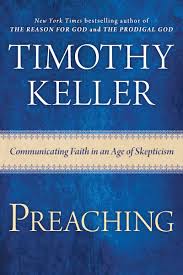 In his book Preaching: Communicating Faith in an Age of Skepticism, Tim Keller addresses how Christianity confronts culture. Wisely he speaks of the way we must (1) affirm truth in culture, (2) confront idols in culture, and (3) show how truth in culture is derived from and only satisfied by the Christ who reigns supreme over all cultures. Thus, instead of just being for or against culture, Keller describes a “Yes, but no, but yes” approach for preaching Christ to culture.
Approaching culture in this nuanced way means understanding the modern world in which we live. In a chapter entitled “Preaching and the (Late) Modern Mind,” he describes the difference between the pagan, pre-Christian world and the way in which Christianity brought dignity and personal value to the West. In other words, before Christianity emerged in the West, the pagan world with its philosophers conceived of the world as an impersonal universe. Belief in a tri-personal God, sovereignly directing history and seeking to redeem humanity changed all of that. And the bounty of the Western world, therefore, is a byproduct of Christianity’s influence.
In one place, Keller nicely summarizes five differences between the pre-Christian world with the Christian West. He then goes on to explain how secularism has taken Christian values to the extreme, making them idolatrous falsehoods. But in explaining how Christian values have gone rogue, he doesn't include them in his compact table. On page 128, there is one column missing (that would help flesh out his argument on pp. 128--33).
So, I added the third column to the table below to help show the way in which the West has left Christianity behind and distorted many of the values it provided. By seeing in our culture post-Christian culture the traces of Christian thought, we can as Keller points out, begin to lead people back to the source of the values (e.g., science, individualism, personal choice) they embrace today. Indeed, if you value and enjoy science, justice, or personal choice today, it is worth noting where those cultural gifts derive. Keller's chapter on preaching Christ to culture is an excellent place to begin thinking about that relationship.
Five Chief Narratives of Western Thought[1]
In his book Preaching: Communicating Faith in an Age of Skepticism, Tim Keller addresses how Christianity confronts culture. Wisely he speaks of the way we must (1) affirm truth in culture, (2) confront idols in culture, and (3) show how truth in culture is derived from and only satisfied by the Christ who reigns supreme over all cultures. Thus, instead of just being for or against culture, Keller describes a “Yes, but no, but yes” approach for preaching Christ to culture.
Approaching culture in this nuanced way means understanding the modern world in which we live. In a chapter entitled “Preaching and the (Late) Modern Mind,” he describes the difference between the pagan, pre-Christian world and the way in which Christianity brought dignity and personal value to the West. In other words, before Christianity emerged in the West, the pagan world with its philosophers conceived of the world as an impersonal universe. Belief in a tri-personal God, sovereignly directing history and seeking to redeem humanity changed all of that. And the bounty of the Western world, therefore, is a byproduct of Christianity’s influence.
In one place, Keller nicely summarizes five differences between the pre-Christian world with the Christian West. He then goes on to explain how secularism has taken Christian values to the extreme, making them idolatrous falsehoods. But in explaining how Christian values have gone rogue, he doesn't include them in his compact table. On page 128, there is one column missing (that would help flesh out his argument on pp. 128--33).
So, I added the third column to the table below to help show the way in which the West has left Christianity behind and distorted many of the values it provided. By seeing in our culture post-Christian culture the traces of Christian thought, we can as Keller points out, begin to lead people back to the source of the values (e.g., science, individualism, personal choice) they embrace today. Indeed, if you value and enjoy science, justice, or personal choice today, it is worth noting where those cultural gifts derive. Keller's chapter on preaching Christ to culture is an excellent place to begin thinking about that relationship.
Five Chief Narratives of Western Thought[1]
| Before Christianity Emerged [in the West] | After Christianity Came to the West | After Christianity ‘Left’ the West |
| The body and material world are less important and real than the realm of ideas | The body and material world are good. Improving them is important. Science is possible. | Science is absolute. Materialism is absolute. Technology is sufficient to solve our problems. |
| History is cyclical, with no direction. | History is making progress. | Progress means history is unimportant. Everything novel is superior to the past. |
| Individuals are unimportant. Only the clan and tribe matter. | All individuals are important, have dignity, and deserve our help and respect. | Individuals are supremely important. Individualistic expression should never be questioned, even when detrimental to the group. |
| Human choices don’t matter; we are fated. | Human choices matter and we are responsible for our actions. | Choice is sancrosanct and must be guarded and guaranteed at all costs. |
| Emotions and feelings should not be explored, only overcome. | Emotions and feelings are good and important. They should be understood and directed. | Emotions and feelings are determinative. To feel authentic I must express my desires and never suppress them. |
- rationality (and an explanation of where the world came from and what we can know about it),
- history (and the meaning of life),
- society (and the relationship of individuals to groups),
- morality (and who gets to determine right and wrong), and
- identity (and where we get our sense of value and purpose).
Leave a comment
Comments are read before they appear. Your email is never published.