February 6, 2025 · 23 min read
Leaving 'Left Behind' Behind: Sixteen Ways to Read Matthew 24 with the Grain of Scripture
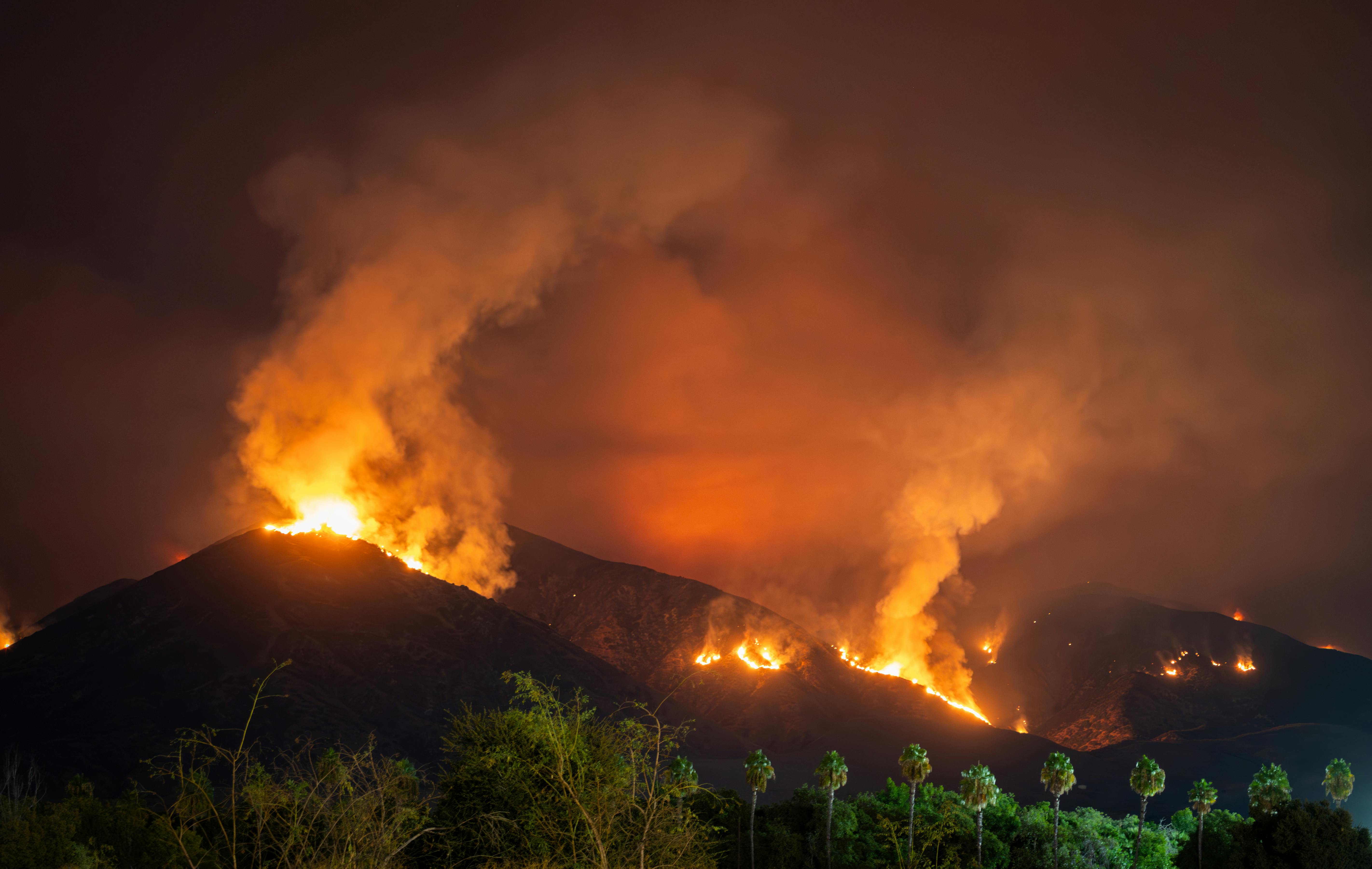 6 And you will hear of wars and rumors of wars. See that you are not alarmed, for this must take place, but the end is not yet. 7 For nation will rise against nation, and kingdom against kingdom, and there will be famines and earthquakes in various places. 8 All these are but the beginning of the birth pains.
-- Matthew 24:6–8 --
6 And you will hear of wars and rumors of wars. See that you are not alarmed, for this must take place, but the end is not yet. 7 For nation will rise against nation, and kingdom against kingdom, and there will be famines and earthquakes in various places. 8 All these are but the beginning of the birth pains.
-- Matthew 24:6–8 --
Excursus: Two Ways to Read Matthew 24
Before jumping into the text, let me highlight two alternative ways to read Matthew 24. The first puts the events of Matthew 24 into the long distant future. The second puts the events during the period of Jesus’s contemporary generation. Indeed, the word “generation” is critical, because Matthew 24:34 declares, “Truly, I say to you, this generation will not pass away until all these things take place.” Without rendering a decision on the best way to interpret this verse and the whole chapter, it is important to recognize the two approaches—the futurist and the historicist (or preterist) readings. By definition, the futurist reading sees all things in the future, the historicist / preterist sees all things in the first century. Yet, there are also others who, despite differing views on Matthew 24:34, will assign different parts of the Olivet Discourse to the past or the future. I will address those below, but first a sampling of the different views drawn from Brian Orr’s excellent work, The Olivet Discourse (2024).[3] First, futurist readings of Matthew 24 place the events referenced by Jesus as things that will happen when Christ comes again. In particular, the language of “this generation” (Matt. 24:34) is understood to be the generation that comes at the end.- Bill Mounce suggests “this generation” is “the generation alive when the series of final events begins (the establishment of the nation of Israel in 1948?).”[4]
- Thomas Ice identifies Jesus’s words to mean “the generation to whom the signs will become evident.”[5]
- John MacArthur denies the original generation, saying, “this generation cannot refer to the disciples’ generation.”[6]
- Daniel Doriani, with greater nuance, acknowledges some events occurring in the first century, but also Jesus’s “prophecies have a second fulfillment in the future,” too.[7]
- John Calvin places “this generation” in the time of Christ. He writes of the coming judgment, they “do not relate to evils that are distant . . . but which are now hanging over you, and ready to fall in one mass.”[10]
- D. A. Carson focuses on the specific word genea (generation), saying, “Even if ‘generation’ by itself can have a slightly larger semantic range, to make ‘this generation’ refer to all believers in every age, or the generation of believers alive when eschatological events start to happen, is highly artificial.”[11]
- R. T. France joins his comments on Matthew 23:36 and Matthew 24:34, saying, “The clear time-scale expressed in this complex of texts indicates that ‘this generation’ is to be taken literally: ‘all these things’ will happen to those who are alive when Jesus is speaking.”[12]
- R. C. Sproul, looking to the “testimony of Jewish interpretation and language study,” concludes that “when Jesus talked about judgment of God falling on ‘this generation,’ he was talking about the people who alive when he spoke.”[13]
- Orr also lists David Brown, A. T. Robertson, David Turner, N.T. Wright, Greg Bahnsen, James Jordan, and Kenneth Gentry as interpreters who place “this generation” in the generation of Jesus.[14]
Sixteen Reasons for a Partial Preterist Reading Matthew 24
Let me list the sixteen reasons for a partial preterist reading of Matthew 24. Below I will explicate them. (And, let the reader understand, these explications remain a work in progress. I am putting them up prematurely, so as to link them to Via Emmaus on the Road. The first four are finished below; the next twelve are forthcoming).- The preceding context of Matthew 23 suggests a first century fulfillment of Matthew 24.
- From a close reading of Matthew, the judgment of the temple should be expected.
- The introduction of the destruction of the temple in Matthew 24:1–2 directs the chapter.
- The Mount of Olives is a location associated with God’s judgment upon Israel.
- The events described in Matthew 24:3–14 have historical referents in the first century.
- The locations and customs found in Matthew 24:15–28 put the events in first century Jerusalem.
- The abomination of desolation (Matt. 24:15) is an historic reference to Daniel, not a future prediction.
- The heavens shaking is prophetic symbol for nations falling (as in Isaiah 13–14, Ezekiel 32, and Joel 2), not simply a final destruction of creation.
- The sign of the Son of Man in the heavens (Matt. 24:29–31) is a reference to his ascension, not his return.
- The angels speak of messengers of the gospel, not the final judgment (Matt. 24:31).
- The lesson from the fig tree identifies the temple as the place of judgment (Matt. 24:32–35).
- “This generation” (Matt. 24:34) is a present reference to the people in Jerusalem during and after Christ’s crucifixion.
- The day or hour hidden from the Son (Matt. 24:36) may be revealed to Jesus in the Garden of Gethsemane.
- Those who are left behind (Matt. 24:40–42) when the judgment comes are blessed, not cursed.
- The parables of Matthew 25 situate Matthew 24 in the first century with prospects for the future.
- The coming of the Son of Man in glory (Matt. 25:31) speaks of a his glorious, future return.
- Israel is identified with Egypt in Matthew 2:15. When Joseph flees Israel to go to Egypt, Matthew says that this departure fulfills Hosea 11:1, “Out of Egypt I have called my son.” The placement of this fulfillment is important. Herod, playing the role of Pharaoh, attempts to kill innocent boys, thus making Jerusalem a new Egypt (cf. Rev. 11:8). And like Egypt of old, this identification suggests a coming judgment. And not only a judgment, but one with signs and wonders (see Matt. 24:29) that would make it evident that God was behind the judgment.
- When John the Baptist introduced Jesus in Matthew 3, he identified Jesus with judgment. Matthew 3:10 begins with John describing the coming judgment on unfruitful trees—an image Jesus will pick up later (see Matt. 21:18–22) But then, John continues in Matthew 3:11–12 to contrast his baptism with Jesus’s baptism of fire. In that setting, John speaks of Jesus clearing the threshing floor, gathering wheat into his barn, and burning the rest with “unquenchable fire.” Indeed, while Jesus comes to save his people from their sins, he is also saving them from the judgment he is bringing upon Israel and the wicked leaders who inhabit the temple.
- Jesus spoke of the destruction of the house in Matthew 7:24–27. In a context where Jesus is speaking against false teachers and false prophets (Matt. 7:13–20), as well as servants who perform signs and wonders (Matt. 7:21–23), he turns to a parable to describe two kinds of people—those who build their lives on the rock and those who build on the sand. Read by itself, this imagery might simply be taken as metaphor, but in the book of Matthew, I take this to be another instance where Jesus is threatening judgment on the temple. The house built on sand is the one that he has come to tear down (Matt. 24:1–2); the house built on the rock is the one he is building (Matt. 16:18). He is the stone that will be rejected, but in his exaltation he becomes the cornerstone of an indestructible house. Meanwhile, the house in Jerusalem will be destroyed by the wind and the waves—flood imagery that Jesus picks up again in Matthew 24:37–38.
- When Jesus speaks of replacing mountains he’s addressing the temple. At a symbolic level, the temple was the place where heaven touched earth; it was a place of elevation and one that was located on a mountain top. Thus, while speaking of mountains, there is good reason for seeing the temple. Indeed, it should not be missed that Jesus says in Matthew 17:20 that prayer should be made for this mountain (the mountain of his transfiguration), so that it might move “from here to there.” From where to where? As I read it, he is saying the mountain of his transfiguration (where his heavenly glory was previewed) will be moved from “heaven to earth.” And where on earth? To Jerusalem, where Jesus’s other prayer directive in Matthew 21:21 calls for “this mountain” (the temple mount) to be thrown down into the sea—another reference to watery judgment. Together, these two mountain top prayers followed the Lord’s Prayer, where Jesus teaches his disciples to pray for the will of God to be done on earth, as it is in heaven. Clearly, in Jesus’s day, the will of God was not being done in the temple, as false teachers continued to lead there (Matthew 23), but after his death and resurrection and with the outpouring of the Spirit it would be. A new temple (the Spirit-filled church) would replace the old. And hence, the imagery of mountains falling and rising speaks of the impending judgment on Jerusalem, with the immediate result that new temple would be built, with Christ as the cornerstone.
- Jesus identifies a coming judgment on the city. In his parable of the wedding feast, Jesus tells the story of a king who throws a banquet for his son. While sending out invitations to this celebration, his servants are mistreated. Some are even killed (Matt. 21:6). Read in the immediate wake of another parable (the parable of the wicked servants in Matthew 21:33–44), this killing recalls the servants who were sent by another master and also killed. In that first parable, the end result is the death of the son and the judgment of the master upon his murderers. In this parable, the killing prompts the master to send his soldiers and to destroy the city. Matthew 22:7 reads, “The king was angry, and he sent his troops and destroyed those murderers and burned their city.” As Jesus is undeniably aiming these parables at chief priests and Pharisees (Matt. 23:35), we should expect to see some type of judgment upon the temple and its wicked personnel. This expectation begins in Matthew 23, with the first part of the Olivet Discourse, and it hits full stride in Matthew 24.
- Jesus cleansing the temple symbolizes what he will do with the temple. Finally, in Matthew 21, when Jesus enters the city on Palm Sunday, he goes immediately into the temple and drives out the money changers (Matt. 21:12–17). Then, on the next day Matthew includes the account of Jesus cursing the fig tree. As many note, this judgment on the fig tree provides commentary on the meaning of his judgment on the temple. Just as the temple lacked any fruit, so did the fig tree. And if the fig tree’s barrenness invited Jesus’s judgment, then so does the temple. Indeed, Jesus, in Matthew 24:32–35, goes so far as to connect the lesson of the fig tree to the immediate generation. What generation does Jesus have in view? The same generation that has failed to bear fruit in keeping with righteousness (Matt. 3:8). Judgment is coming on the temple because despite it being the season for figs, the temple has only produced leaves. And now, Jesus is replacing the barren fig tree with another.
O Jerusalem, Jerusalem, the city that kills the prophets and stones those who are sent to it! How often would I have gathered your children together as a hen gathers her brood under her wings, and you were not willing! See, your house is left to you desolate. (vv. 37–38, emphasis mine)
Critical for Matthew 24, Matthew 23:38 explains how the temple could be destroyed. If the temple has been left desolate (lit. a wilderness), it means that the life-giving presence of God is absent. No longer does the temple serve as place where the living water of God is found. Instead, it has become kindling for the fire (Matt. 3:10–12). And thus, Jesus can take aim at the temple in Matthew 24:1–2, which then extends throughout the rest of the chapter. Fourth, the Mount of Olives is a location associated with God’s judgment on Israel. In Matthew 24:3, we learn that Jesus speaks to his disciples as they came to him privately to ask about his statements about the temple. And Matthew places this conversation on the Mount of Olives. There may be many reasons for this location, but one them relates to a prophecy given in Zechariah. In Zechariah 14:4, we read, “On that day his feet shall stand on the Mount of Olives that lies before Jerusalem on the east, and the Mount of Olives shall be split in two from east to west by a very wide valley, so that one half of the Mount shall move northward, and the other half southward.” While some may dismiss the connection between Zechariah 14 and the Olivet Discourse, I would urge readers to see a number of connections.- The Mount of Olives are only mentioned by name twice in the Old Testament. The first recounts David fleeing from the city, because his son Absalom had betrayed his father and stolen his throne (2 Sam 15:30). The other is Zechariah 14, which speaks of the coming of God’s kingdom and the cosmic changes that would precede it. This means that in the final week of Jesus’s life, which is filled with prophetic fulfillment, there is only one prophesy that connects to the Mount of Olives—namely, Zechariah 14.
- Zechariah has already been cited in the context of Matthew 24. In Matthew 21:4–5, when Jesus entered the city, on the first day of the week, Matthew 21:4–5 reads, “This took place to fulfill what was spoken by the prophet, saying, “Say to the daughter of Zion, ‘Behold, your king is coming to you, humble, and mounted on a donkey, on a colt, the foal of a beast of burden.’” This citation comes from Zechariah 9:9. And, as many have observed, these final chapters of Zechariah point to Christ’s death and resurrection in multiple ways. In fact, without overestimating the role of Zechariah in the Gospels, it might be fair to say that Zechariah 9–14 is on par with Isaiah 53 in explaining the death of Christ. And specifically, I think it is fair to say that Matthew 21–27 is written to follow the outline of Zechariah 9–14. And, if this is the case, it reinforces the connection between Zechariah 14 and Matthew 24.
- Supporting this reading, John also uses Zechariah 14 to explain the events of Jesus’s activity in Jerusalem. For instance, Zechariah 14:6–7 says, “6 On that day there shall be no light, cold, or frost. And there shall be a unique day, which is known to the Lord, neither day nor night, but at evening time there shall be light.” In John 8:12, Jesus announces himself as the light of the world, and he does so during the Feast of Booths, which is named three times in Zechariah 14 (vv. 16, 18, 19). Even more, the Feast of Booths there was a night when the temple was lit up all night long, just as Zechariah 14 describes. Thus, there is an intentional connection between Jesus declaring himself to be the light of the world at a time when the temple was lit up at night.Similarly, Zechariah 14:8 reads, “On that day living waters shall flow out from Jerusalem, half of them to the eastern sea and half of them to the western sea. It shall continue in summer as in winter.” In John’s Gospel, the fourth Evangelist picks up this verse, when he identifies Jesus as the source of living water (John 7:37–39). Again, the timing of this living water matters. In the Feast of Booths, there was a water pouring ritual that took place in the temple. And so, John is connecting Jesus to Zechariah 14 (as well as Ezekiel 47). Then finally, Zechariah 14:21 ends with these words, “And there shall no longer be a trader in the house of the Lord of hosts on that day.” Incredibly, John begins his Gospel in John 2:13–17, by identifying Jesus as the one who went into the temple and drove out the “traders.” In this way, John was not waiting for the future for Jesus to fulfill Zechariah 14. Rather, it happened in his own lifetime. And I would argue the same is true when we come back the Gospel of Matthew.
- In Matthew 24, I would suggest at least ten ways Zechariah 14 is fulfilled. I say “suggest” because I am not going to make all the literary connections here. Nevertheless, here are the connections that deserve consideration.
-
- “I will gather all the nations against Jerusalem” (Zech. 14:2) = The nations will hate you for my sake (Matt. 24:9)
- “Half of the city . . .” (Zech. 14:2) = this suggests the division that Jesus brings to the city, which is a theme in Matthew (Matt. 10:34)
- “The Lord will go out and fight” (Zech. 14:3) = The cross is an act of war and Matthew identifies the theme of wars and rumors war (Matt. 24:4–8)
- “On that day his feet shall stand on the Mount of Olives” (Zech. 14:4) = while Jesus is sitting on the Mount of Olives, it is his feet that are put on the ground there
- “earthquake” (Zech. 14:5) = there is an earthquake that occurs in Matthew 27:51
- “there shall be no light” (Zech. 14:6) = Mark 15:33 recounts the darkness at noon
- “a great panic” (Zech. 14:13) = Matthew 27:62–66 describes the condition of the city when his body is missing
- “And the wealth of all the surrounding nations shall be collected, gold, silver, and garments in great abundance” (Zech. 14:14) = already in Matthew, the wealth of the nations have come to Christ, the king of the Jews (Matt. 2:1–12) and in his death he will be crowned “king of the Jews” (Matt. 27:37)
- The nations will come worship the Lord as King (Zech. 14:15–16) = Christ not only Immanuel (God with us), but he receives worship (Matt. 28:16)
- The house will be made pure (Zech. 14:20–21) = Jesus symbolically cleansed the house of God on Psalm Sunday (Matt. 21:12–17) and would do so literally when he replaced the corrupt house with the house he was building.
Leave a comment
Comments are read before they appear. Your email is never published.